
Article
Engaging Hard-to-Reach HCPs in 2026

Navigating the shifting terrain of healthcare provider (HCP) engagement requires exhibitors and sponsors at medical conferences to be agile, informed, and strategic. Recent analyses, including those by Pri-Med, offer valuable data-driven insights that empower stakeholders to forge meaningful connections with HCPs, particularly those who are traditionally difficult to access.
Comprehensive Strategies for Engagement
Capitalizing on Digital Engagement
- HCPs have moved digital — 76% prefer digital conferences over in-person, and 43% engage with educational podcasts, making online platforms essential for meaningful reach.
- Virtual conferences offer unique opportunities for interaction. Sponsors can demonstrate products, engage in Q&A sessions, and educate a geographically diverse HCP audience.
- Customized digital content, tailored to the nuanced needs of HCP specialties, can enhance engagement. Data show that personalized digital interactions significantly boost recall and positive brand perception.
Optimizing In-Person Conference Participation
- In-person events remain vital for deep engagement with conference participants. Attendee data from 2025 indicate a consistent and engaged attendee base, with over 11,000 clinicians participating in recent Pri-Med conferences, of whom 95% were active prescribers.
- Effective booth design and interactive presentations can significantly increase conference attendee engagement, with strategies like live demonstrations and hands-on, real-time experiences proving particularly effective in capturing HCP attention.
- Networking opportunities at in-person events are unparalleled, allowing sponsors to build rapport with HCPs, understand their challenges firsthand, and position their offerings as solutions.
Leveraging Learning Behavior Insights
- HCPs have diverse preferences for learning formats necessitating a segmented approach by exhibitors and sponsors. For instance, while some HCPs prefer the immersive experience of in-person learning, others value the convenience of accessing content online.
- In-person events remain a critical channel for sponsor investment, with 92% of HCPs expecting their live conference attendance to increase or stay the same in 2026., making in-person events a critical channel for sponsor investment.
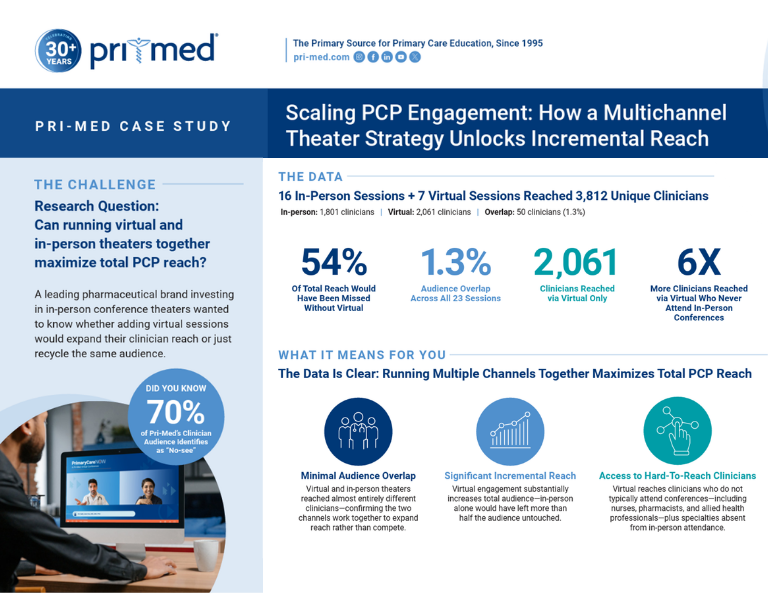
- A multichannel approach is key to reaching HCPs, who over the past 24 months engaged across all formats — 68% through on-demand, 54% via live virtual, and 38% at in-person conferences — underscoring the need for a multi-channel approach.
- Insights into preferred content types, such as the growing popularity of podcasts for their convenience and accessibility, can guide content strategy decision-making and ensure that brand awareness and messaging resonate with a target audience.
Content Strategy Nuances
- Clarity, relevance, and applicability are key in content creation, and HCPs favor materials that directly contribute to their clinical practice and patient care.
- Data suggests that HCPs are more likely to engage with evidence-based content presented by respected peers in their field, underscoring the importance of credible and authoritative content sources.
- Interactive content, such as Q&A sessions, live polls, and case studies, can enhance engagement levels. Feedback loops provide valuable insights for content refinement and strategy adjustment.
Data-Driven Decision Making
- Using analytics from both in-person and digital engagements can provide exhibitors and sponsors with a comprehensive view of HCP interests, engagement patterns, and content preferences, enabling more targeted and effective future interactions.
- Post-event surveys and engagement metrics can yield actionable insights, allowing sponsors to measure ROI, identify successful strategies, and areas for improvement.
Conclusion
Adopting a multi-faceted and data-informed approach is essential for medical conference exhibitors and sponsors to engage effectively with HCPs in 2026. By understanding and responding to the evolving learning preferences of HCPs across digital and in-person formats, exhibitors and sponsors can maximize their impact, foster meaningful connections, and contribute to the ongoing education and empowerment of HCPs in an increasingly complex healthcare landscape.

Written by
Mindy Bilgrey
SHARE ON


.png)
